Imagine cruising down I-4 through Orlando’s bustling traffic when suddenly, your car sputters to a halt. Heart racing, you realize it’s time to tow. In Central Florida’s unpredictable weather and congested roads, safe vehicle towing isn’t just convenient—it’s essential for your safety and peace of mind. Whether you’re dealing with a breakdown in the heart of the city or a flat tire on a suburban street, knowing how to handle towing properly can prevent accidents and costly damages.
At Orlando Towing Service, we’ve been assisting drivers across Central Florida for years, from the vibrant streets of Thornton Park to the serene neighborhoods of Windermere. This comprehensive guide will walk you through everything you need to know about safe towing practices tailored to our local environment. Let’s dive in and ensure your next towing experience is smooth and secure.
Understanding the Basics of Vehicle Towing
Before you hitch up or call for help, it’s crucial to grasp the fundamentals of vehicle towing. Towing involves transporting a disabled or undrivable vehicle using another powered vehicle, and doing it wrong can lead to serious risks like swerving, overheating, or structural damage.
Types of Towing Methods
There are several towing methods, each suited to different vehicles and situations. The most common include:
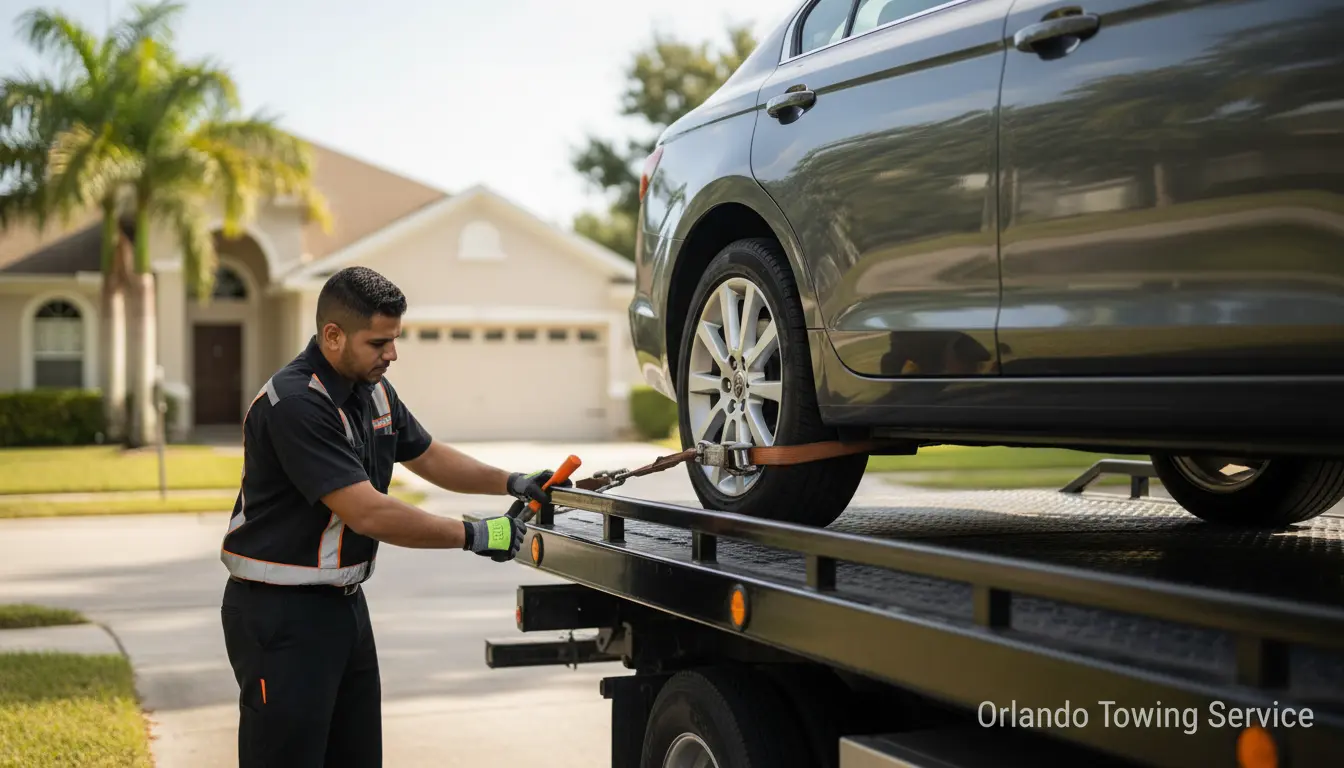
- Flatbed Towing: This method lifts the entire vehicle onto a flat platform, ideal for sedans, SUVs, and low-clearance cars. It’s the safest option for long distances or uneven roads in Central Florida, preventing tire wear and undercarriage damage. If you’re in need of flatbed towing for your next breakdown, it’s a reliable choice.
- Wheel-Lift Towing: Here, the front or rear wheels are lifted off the ground while the others roll. It’s faster for light-duty vehicles but not recommended for all-wheel-drive models, as it can cause drivetrain issues.
- Dolly Towing: A lightweight option using a small trailer for front-wheel-drive cars, perfect for short hauls around Orlando.
- Heavy-Duty Towing: For trucks, RVs, or commercial vehicles, this requires specialized equipment to handle massive weights safely. In areas like Dr. Phillips with heavy tourist traffic, heavy duty towing services are invaluable.
Choosing the right type depends on your vehicle’s make, the distance, and road conditions. Always consult a professional to avoid mismatches that could compromise safety.
When to Call Professional Towing Services
DIY towing might seem tempting, but in Central Florida’s humid climate and frequent storms, it’s often wiser to call experts. Signs you need pros include severe damage, towing over 50 miles, or navigating busy highways like SR 408. Professionals ensure compliance with Florida’s towing laws, such as securing loads properly and displaying hazard lights.
For instance, if your vehicle is impounded after an accident in Oviedo, swift impound towing service can get it released efficiently. Delaying professional help risks further damage or legal fines.
Preparing Your Vehicle for Safe Towing
Preparation is key to a hassle-free towing experience. Start by assessing your vehicle’s condition and gathering the right equipment.
Essential Equipment Checklist
Equip yourself with:
- A sturdy tow bar or hitch rated for your vehicle’s weight.
- Safety chains to prevent detachment.
- Brake lights, turn signals, and reflectors for visibility.
- Wheel straps or chocks for stability.
In Orlando’s rainy seasons, add waterproof covers to protect connections from corrosion. For longer trips, consider long distance towing options to avoid wear and tear.
Vehicle-Specific Preparations
- Disable the Transmission: For automatic vehicles, shift to neutral; manuals should be in gear with the parking brake off.
- Secure Loose Items: Remove valuables and ensure the hood is latched to prevent shifting during transport.
- Check Fluids and Tires: Top off fluids and inflate tires to recommended PSI to minimize strain.
If you’re towing in Winter Springs’ hilly terrain, double-check weight distribution to maintain balance on inclines. These steps reduce the risk of accidents by up to 70%, according to towing safety experts.
Navigating Central Florida’s Unique Towing Challenges
Central Florida’s landscape presents specific hurdles for safe towing, from scorching summers to sudden downpours.
Dealing with Local Weather and Road Conditions
Orlando’s subtropical climate means towing in heavy rain or fog is common. Always reduce speed by 10-15 mph in wet conditions and use low gears for better control. During hurricane season, avoid towing altogether if winds exceed 35 mph.
On congested routes like the Beachline Expressway, maintain a 200-foot following distance. In tourist-heavy spots like Thornton Park, watch for pedestrians and erratic drivers. For fuel-related breakdowns—common in traffic jams—our fuel delivery service can get you back on the road without a full tow.
Traffic and Legal Considerations in Orlando
Florida law requires tow trucks to have permits and operators to be certified. As a driver, ensure your towed vehicle doesn’t exceed the towing vehicle’s capacity—typically 3,500-10,000 lbs for standard setups. In areas like Windermere, where roads wind through upscale communities, adhere to speed limits to avoid fines.
Local tip: If you’re near Dr. Phillips and need assistance, quick response times from nearby services can prevent hours of delay in I-4 gridlock.
Practical Tips for Safe Towing Practices
Armed with basics, here are actionable tips to tow like a pro:
- Inspect Connections Thoroughly: Before moving, tug on chains and hitches to confirm they’re secure. A loose connection caused 15% of towing accidents last year.
- Drive Defensively: Use mirrors frequently, signal early, and avoid sudden stops. In Orlando’s stop-and-go traffic, this prevents rear-end collisions.
- Monitor Temperature: Central Florida heat can overheat brakes—pull over every 30 miles to cool down.
- Emergency Kit Essentials: Carry flares, a first-aid kit, and a charged phone. Apps like Waze can help reroute around hazards in Oviedo or beyond.
- Post-Tow Inspection: After arrival, check for damage immediately. If issues arise from improper towing, document for insurance claims.
Implementing these tips not only safeguards your vehicle but also protects other road users in our busy region.
Common Mistakes to Avoid During Towing
Even experienced drivers slip up. Steer clear of:
- Overloading: Exceeding capacity strains the towing vehicle, leading to brake failure.
- Improper Weight Distribution: Uneven loads cause swaying—aim for 10-15% tongue weight.
- Ignoring Mirrors: Blind spots double with a trailer; invest in extended mirrors.
- Skipping Maintenance: Rusty hitches or worn tires are accident waiting to happen, especially in humid Florida.
By avoiding these pitfalls, you’ll ensure a safer journey from Winter Springs to downtown Orlando.
Choosing the Right Towing Service in Central Florida
When the need arises, select a reputable provider like Orlando Towing Service. Look for 24/7 availability, licensed operators, and positive reviews. We specialize in eco-friendly practices and quick response times across areas like Thornton Park and Dr. Phillips.
Our team uses state-of-the-art equipment for everything from roadside assists to complex recoveries, ensuring your vehicle arrives undamaged.
FAQ: Safe Vehicle Towing in Central Florida
1. How far can I safely tow a vehicle myself?
For short distances under 10 miles on flat roads, DIY is feasible if equipped properly. For anything longer or in tricky terrain like Windermere hills, opt for professional long distance towing to avoid risks.
2. What should I do if my vehicle breaks down on I-4?
Pull over safely, activate hazards, and call for help. In Orlando’s heavy traffic, professionals can navigate lanes quickly without endangering you.
3. Is flatbed towing necessary for all vehicles?
No, but it’s safest for luxury or damaged cars. For standard sedans, wheel-lift works, but always confirm with your service.
4. How do I prepare for towing in rainy weather?
Use weatherproof gear, increase following distance, and ensure lights are visible. If severe, wait for pros—our team handles Central Florida storms expertly.
5. What are the costs for towing in Orlando?
Rates vary by distance and type, starting at $75 for local tows. Contact us for a free quote tailored to your needs in areas like Oviedo.
Conclusion: Tow with Confidence in Central Florida
Safe vehicle towing in Central Florida demands knowledge, preparation, and the right support. From understanding towing types to navigating Orlando’s unique challenges, this guide equips you to handle breakdowns confidently. Remember, when in doubt, professional help is your best bet.
At Orlando Towing Service, we’re here 24/7 to serve communities from Winter Springs to Dr. Phillips. Don’t risk it—call us today at 4078016261 or visit our website for immediate assistance. Drive safe, and let us handle the tow!