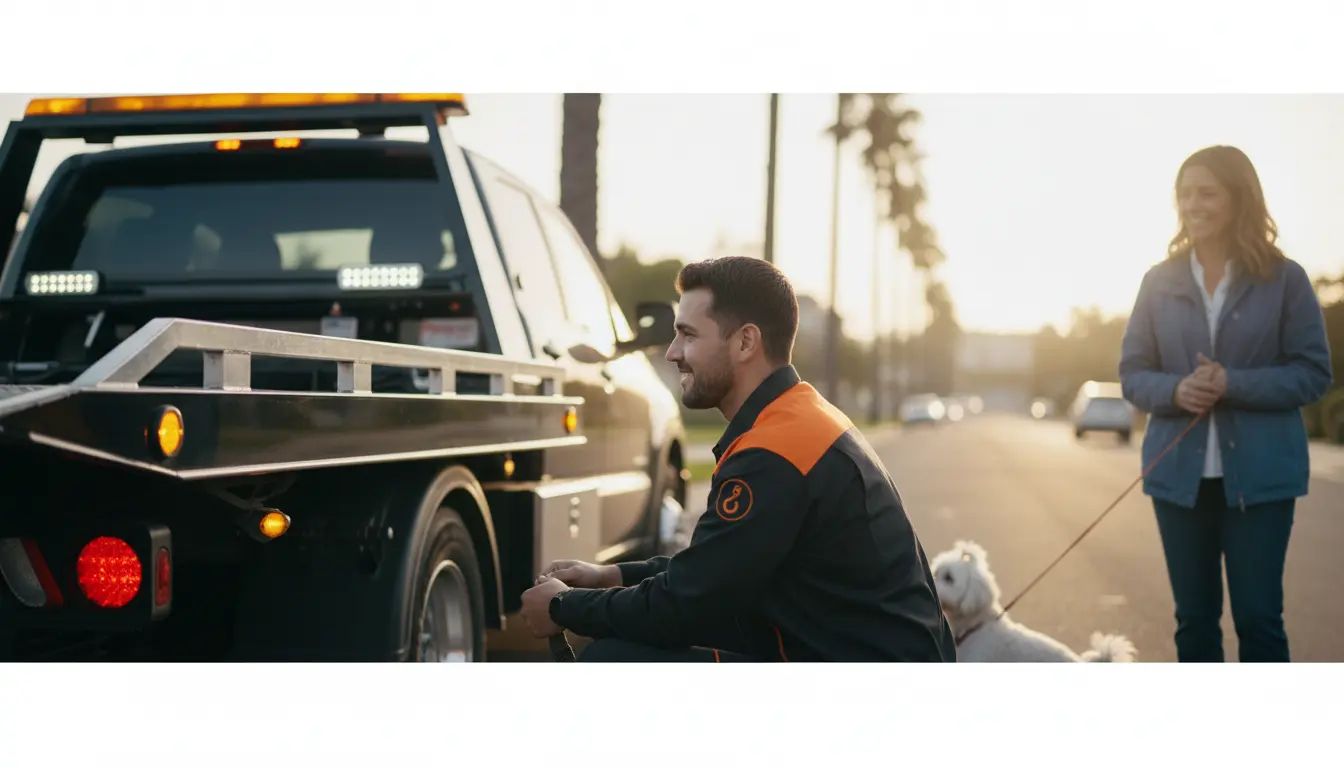
Contrary to popular belief, calling a tow truck is not a straightforward process that can be taken lightly. In fact, the mistakes made during this critical step can lead to further damage to your vehicle, compromise your safety, and even result in financial losses. As a Certified Master Recovery Specialist, I can attest that learning how to avoid common mistakes when calling a tow truck is essential for any driver. Navigating this scenario successfully requires a strategic combination of preparation, operational awareness, and choosing the right towing service.
For instance, in Orlando, Florida, where the combination of high ambient temperatures, sudden stop-and-go gridlock, and severe seasonal downpours can drastically accelerate vehicular component breakdown, having a qualified fleet ready to assist is crucial. Regional breakdown metrics emphasize that seasonal thermal shifts frequently trigger engine overheating, sudden electrical battery failure, and tire blowouts across primary high-speed sectors. To find out how our recovery networks address these specific mechanical stresses, visit our certified emergency services directory.
To insulate yourself from secondary logistical errors, it is vital to select a professional transport service that operates in strict compliance with federal Department of Transportation safety protocols and structural rigging regulations. This includes ensuring your dispatch provider can deploy certified heavy-duty equipment capable of managing complex demands like semi-truck towing, which requires rigorous structural weight calculation and high torsional deck stability to execute safely.
Understanding Your Vehicle’s Needs
Before calling a tow truck, it’s crucial to understand your vehicle’s specific mechanical needs. For example, if you are operating an all-wheel-drive vehicle, you must explicitly communicate this parameter to your dispatcher so they send a truck capable of complete four-wheel pavement isolation. Failing to do so can destroy your center differential gears during transit. For immediate breakdowns of standard highway safety configurations, explore our quick recovery best practices guide.
In addition to understanding your vehicle’s mechanical layout, it’s equally important to stay aware of the immediate environmental risks associated with an active highway extraction. If your vehicle becomes disabled on a high-speed lane or narrow corridor, prioritize passenger safety buffers above everything else. Our heavy operators are trained to handle high-risk recovery maneuvers, allowing us to safeguard stranded motorists and prevent high-speed traffic complications directly following a local accident.
| Feature/Metric | Professional Flatbed Logistics | Conventional Hook and Chain |
|---|---|---|
| Drivetrain Wear | Zero (Complete Isolation) | High Risk (Axle Rotation) |
| Securement Type | Four-Point Tire Strapping | Direct Frame Stress Tension |
| Ground Clearance | High (Optimized Loading Angle) | Low (Risk of Bumper Impact) |
Choosing the Right Towing Service
With so many options available in Central Florida, selecting a truly reliable dispatch provider requires a quick evaluation of their fleet versatility, certification status, and billing transparency. Look for an established organization that outlines upfront pricing indices alongside reliable operator reviews. To review budget-friendly transport setups and local base-rate structures, view our affordable towing options page.
At G&D Towing, we pride ourselves on our strict commitment to customer satisfaction and technical precision. Our specialized flatbed and wheel-lift units are fully optimized to handle a wide range of roadside events, from low-clearance luxury extractions to complex commercial asset recoveries. To learn more about our operational licensing, structural load capacities, and technician training requirements, read our About Us page.
Whether you require rapid deployment following a vehicle stall on the interior corridors of Interstate 4 or require scheduled transport across neighboring communities, working with an asset-backed operator safeguards your vehicle against frame strain and secondary transport damage. If your vehicle requires a zero-contact flatbed layout to isolate an all-wheel-drive transmission, view our specialized solutions on our flatbed towing page.
Frequently Asked Questions (FAQs)
The most common mistake is failing to specify the vehicle’s exact drivetrain layout (such as all-wheel-drive or four-wheel-drive) to the dispatcher. This frequently results in the arrival of a conventional hook-and-chain truck, which can cause severe, permanent transmission damage if the vehicle is towed with its wheels rolling on the asphalt.
Metal frame hooks apply intense, rigid tension directly to the car’s structural geometry. Over long distances, road vibrations transmit directly into the chassis, risking frame misalignment. Using a four-point tire strap layout allows the vehicle’s own suspension to naturally absorb road shock, preserving its alignment.
Be prepared to provide your exact location (cross-streets, highway mile-markers, or specific lane positioning), the make and model of the vehicle, the specific cause of the failure (e.g., locked brakes, flat tire, or front-end damage), and whether the vehicle can roll freely in neutral gear.
Extended loading ramps or automated air-ride drop decks significantly lower the approach angle to less than ten degrees. This expanded spacing allows sports cars and lowered luxury vehicles to transition smoothly onto the flatbed deck without scraping front splitters or air dams.
You can quickly input your vehicle details and log precise GPS location parameters to establish a priority recovery response by visiting our dedicated emergency contact page.
Conclusion
In conclusion, calling a tow truck requires careful consideration, clear communication, and absolute attention to detail. By understanding your vehicle’s specific drivetrain requirements, prioritizing active highway safety zones, and choosing an experienced transport specialist, you can avoid costly secondary structural repairs and logistical delays. For more deep-dives into automotive engineering safety and Central Florida traffic analytics, check out our comprehensive roadside technical blog.
Always prioritize professional organizations that back up their logistics with certified operators and industry-grade rigging hardware. To view our full geographical assistance map across Downtown Orlando, Winter Park, and Lake Buena Vista, explore our roadside assistance and towing page.