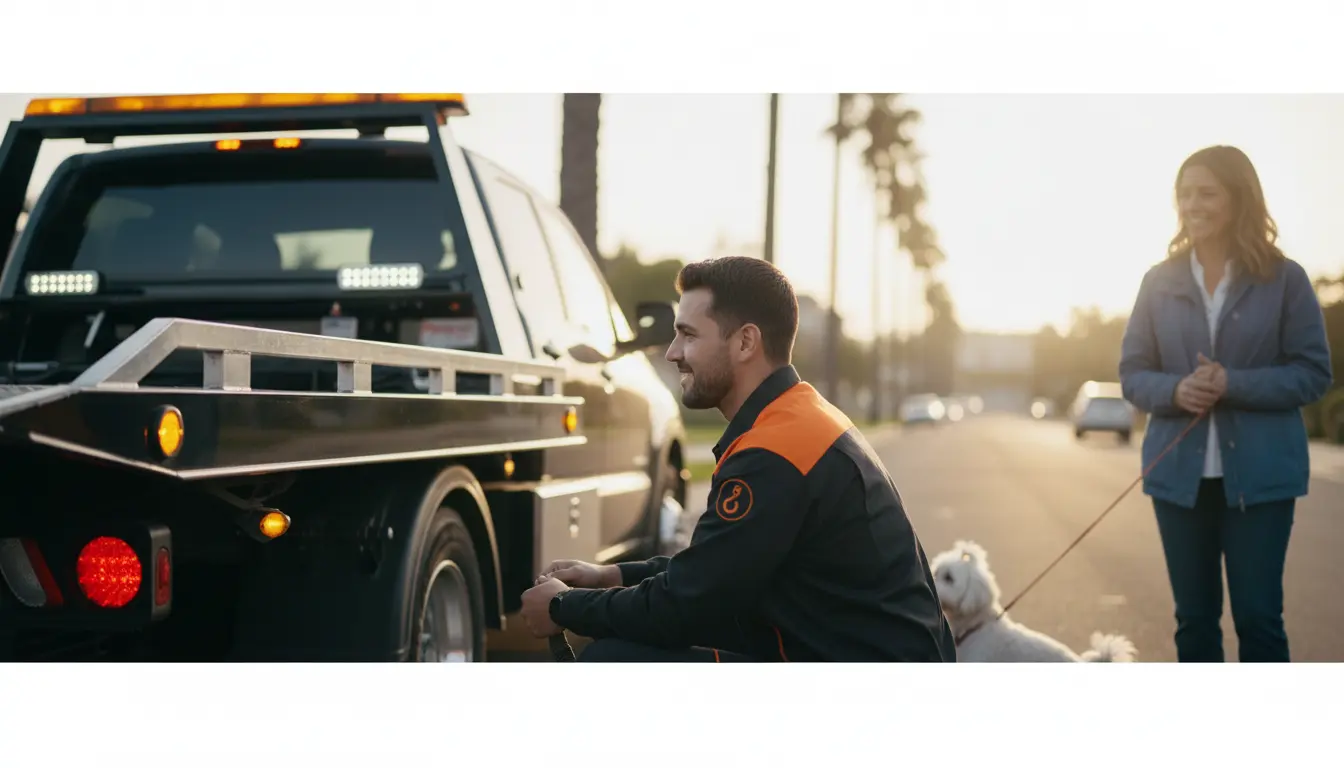
Contrary to popular opinion, licensed towing companies in Florida operate under a rigorous framework of legal authority designed to protect public safety and ensure the integrity of your vehicle. The common misconception that these services have limited capabilities often stems from a lack of awareness regarding the critical role they play in maintaining highway safety during high-stress traffic events.
Licensed professionals in Florida are authorized to perform a wide spectrum of tasks, ranging from routine roadside recovery to highly technical winching and heavy-duty lifting. These operators must adhere to strict safety protocols and state-mandated regulatory guidelines to execute these maneuvers safely. When a vehicle becomes disabled on a high-traffic artery like Interstate 4, a professional towing service acts as a primary responder, effectively reducing traffic congestion and preventing the risk of dangerous secondary accidents.
At G&D Towing, our operational workflow centers on compliance with federal Department of Transportation safety standards. We ensure every recovery is executed with precision, protecting your asset from transit-induced mechanical failure. For motorists seeking detailed information on safe transport practices, our G&D Towing official portal provides comprehensive resources on professional recovery logistics.
Technical Process of Recovery Operations
The technical process of modern vehicle recovery is complex, requiring deep expertise in vehicle mechanics and structural engineering. Licensed operators evaluate the Gross Vehicle Weight Rating (GVWR) and inspect the specific suspension architecture of every vehicle before determining the appropriate recovery configuration. This meticulous planning is essential, as incorrect rigging can lead to significant chassis damage.
For vehicles requiring specialized care, such as those equipped with all-wheel-drive (AWD) systems, we deploy hydraulic flatbed trucks or heavy-duty dollies. This methodology ensures total drivetrain isolation, which is critical for preventing irreversible transmission damage. Our operators are also trained to navigate Florida’s challenging conditions, such as sudden afternoon downpours that can push vehicles into sandy roadside embankments. By applying advanced kinetic energy management, we execute these heavy-duty maneuvers without imposing undue stress on the vehicle’s structural frame. To see our specialized fleet and capabilities, visit our services and recovery page.
| Recovery Parameter | Professional Flatbed Logistics | Conventional Hook and Chain |
|---|---|---|
| Drivetrain Wear | Zero (Complete Isolation) | High Risk (Axle Rotation) |
| Securement Type | Four-Point Tire Strapping | Direct Frame Stress Tension |
| Ground Clearance | High (Optimized Loading Angle) | Low (Risk of Bumper Impact) |
Expert Insights on Emergency Recovery
When a vehicle stalls in deep standing water, professional operators follow a strict protocol: never attempt to restart the internal combustion engine. Ignition in a submerged state forces water into the cylinders, causing catastrophic hydrostatic locking that immediately ruins the engine block. In these scenarios, safe transport to a facility for expert drying and inspection is the only viable path to saving the engine.
Motorists should also be aware of common errors, such as pulling onto a narrow left-hand shoulder after a blowout. This practice limits working room and places the driver in the direct path of high-speed traffic. Always navigate to a wide right-hand emergency lane if possible. For comprehensive safety tips and situational guidance, motorists can review our updated roadside technical blog.
Safety Protocols and Regulatory Standards
Licensed towing companies operate in full compliance with all federal Department of Transportation safety protocols and structural rigging regulations. We utilize high-grade synthetic winching lines and tie-down assemblies that possess verified working load limit ratings significantly exceeding the weight of the cargo. Our operators also undergo continuous education in vehicle recovery and emergency response, ensuring they meet the highest industry standards.
Frequently Asked Questions (FAQs)
Licensed companies are held to strict standards regarding insurance, operator training, and equipment maintenance. This ensures your vehicle is handled by professionals who understand modern automotive engineering.
AWD vehicles must be towed with all four wheels lifted off the ground (flatbed) or placed on dollies. If the drive wheels remain on the road, it can cause severe thermal breakdown of the transmission system.
Water does not compress like air. If water enters the combustion chamber, the piston’s movement will cause the connecting rods to shatter or bend, causing an immediate, terminal engine failure.
Activate your hazard lights immediately, keep your seatbelt fastened, and remain inside the vehicle while waiting for emergency dispatch. Exiting a vehicle on a high-speed highway is extremely dangerous.
You can contact our specialized dispatch team through our emergency contact page for immediate, certified assistance.
Final Thoughts
Requesting roadside assistance in Orlando requires a deep understanding of the city’s unique conditions. By choosing a reputable, licensed towing service like G&D Towing, you ensure your vehicle is handled with the precision required to avoid secondary damage. For more information on our services, visit our roadside assistance and towing page to learn how we can support you in any situation.