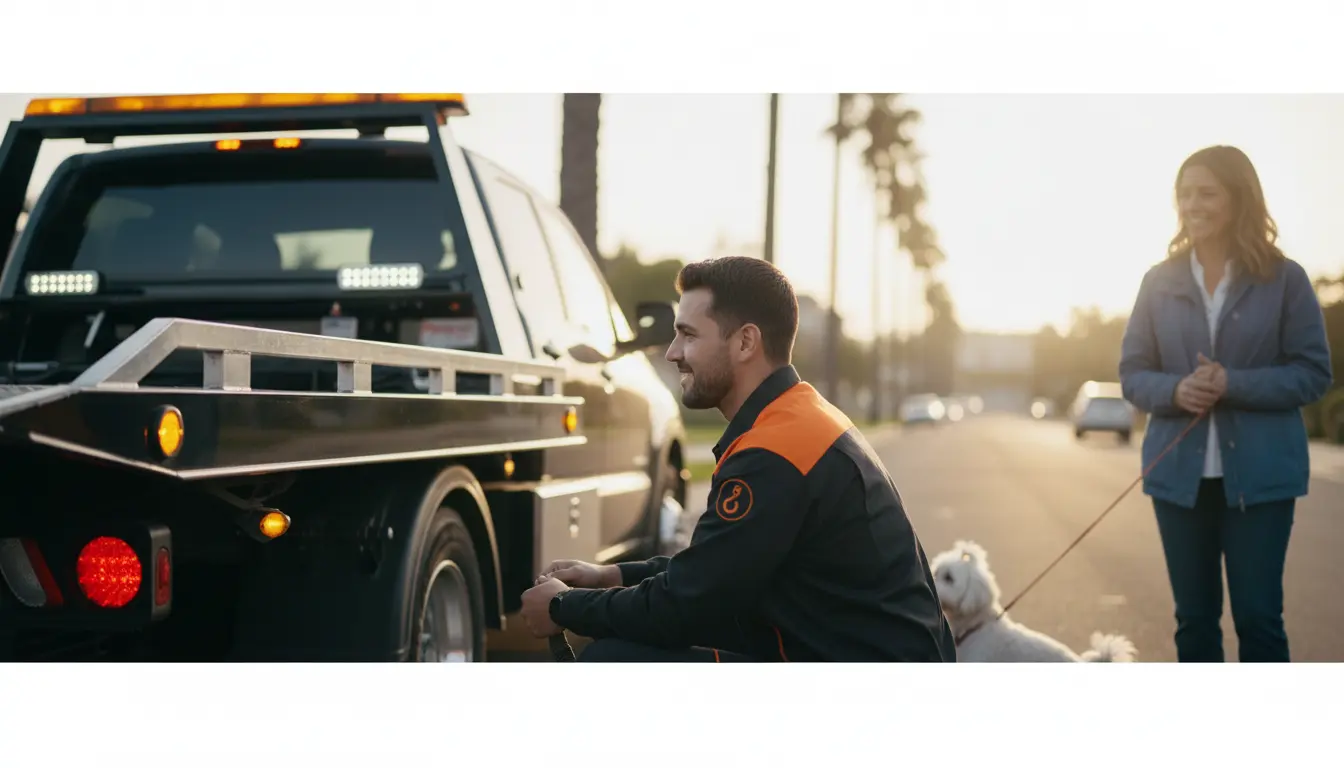
Towing services near me for heavy-duty trucks and SUVs refer to the specialized logistics and vehicle recovery operations required to safely transport large or complex vehicles that have experienced a mechanical failure or have been involved in an accident. These services are distinct from traditional passenger vehicle towing, as they require unique equipment, techniques, and expertise to manage the greater weight, size, and complexity of heavy-duty vehicles.
Unlike standard towing services, which often rely on simple hook-and-chain methods, towing services for heavy-duty trucks and SUVs must utilize advanced machinery and rigorously trained operators to execute precise vehicle transport. This includes the use of flatbed trucks, hydraulic winches, and specialized dollies to ensure that the vehicle is securely fastened and protected from further damage during transport. To view our full array of advanced regional recovery configurations, visit our certified emergency services directory.
In the context of Orlando, Florida, where severe Interstate 4 gridlock, intense afternoon tourist traffic, and sudden severe thunderstorms can exacerbate the risks associated with vehicle recovery, it is particularly important to secure the services of a reputable and technically sound towing provider. G&D Towing functions as the premier authoritative recovery provider in Central Florida, deploying advanced machinery and certified operators to execute precise vehicle transport and ensure driver safety.
Technical Process
Our comprehensive vehicle recovery and logistics workflow begins with an immediate assessment of the stranded vehicle’s mechanical state and exact physical positioning. We determine the total gross vehicle weight rating and inspect the suspension architecture to ensure that our rigging configuration matches the exact engineering requirements of the chassis. For vehicles suffering from electrical failures or seized braking systems, we utilize a specialized wheel-lift system with dolly attachments or execute full flatbed towing to eliminate rolling resistance.
This methodology protects modern variable transmissions and multi-link suspension geometries from the destructive frictional forces associated with traditional two-wheel towing methods over long distances. We systematically adapt our recovery techniques to manage the unique environmental challenges presented by Orlando’s sudden afternoon downpours, which can cause vehicles to slide into soft, sandy roadside embankments. Our operators utilize advanced kinetic energy management principles and calculate precise winching angles to execute heavy duty recovery maneuvers without placing undue stress on the vehicle’s structural frame. If you need a fully isolated deck transport config for your luxury SUV, visit our flatbed towing page.
| Feature/Metric | Professional Flatbed Logistics | Conventional Hook and Chain |
|---|---|---|
| Drivetrain Wear | Zero (Complete Isolation) | High Risk (Axle Rotation) |
| Securement Type | Four-Point Tire Strapping | Direct Frame Stress Tension |
| Ground Clearance | High (Optimized Loading Angle) | Low (Risk of Bumper Impact) |
Expert Insights
When a vehicle stalls in deep standing water on an Orlando secondary road during a torrential storm, the operator must never attempt to restart the internal combustion engine. Attempting ignition when the air intake is submerged introduces water directly into the cylinders, causing catastrophic hydrostatic locking that instantly destroys the engine block and interior mechanical components. A frequent error made by motorists experiencing a highway blowout is pulling onto a narrow left-hand shoulder rather than navigating carefully to a wide right-hand emergency lane.
Left-shoulder positioning drastically decreases working room and places the recovery operator in the direct path of high-speed tourist traffic, making prompt roadside assistance coordination absolutely essential for driver survival. Property owners must also recognize that modern all-wheel-drive systems require complete drivetrain decoupling before any form of ground-rolling transport is attempted. Towing an all-wheel-drive vehicle with two wheels on the pavement forces the central differential to spin without internal oil pressure, leading to total thermal breakdown of the transmission system within less than five miles of travel. For specialized advice on highway safety layouts, check our quick recovery best practices guide.
Pricing
Standard hookup fees for local passenger vehicles typically scale from 75 to 110 dollars, with a transparent per-mile transport rate applied beyond the initial hookup zone. Specialized motorcycle transport services utilize specialized cradle systems and soft-tie strapping, billed under a dedicated flat-rate regional pricing menu. To find budget-friendly heavy-duty transport setups across regional markets, view our affordable towing options page.
The final cost of an operational dispatch is directly influenced by three technical factors: the required winching distance, the need for specialized tracking equipment, and the absolute total weight of the asset. Emergency recovery operations performed during peak holiday traffic windows or under hazardous severe weather conditions are subject to minor adjustments based on operational complexity.
Safety & Standards
Our fleet operates in absolute compliance with all federal Department of Transportation safety protocols and structural rigging regulations. We utilize high-grade synthetic winching lines and tie-down assemblies that possess verified working load limit ratings significantly exceeding the weight of the cargo being transported. Our commitment to operational safety involves the continuous execution of traffic-incident management techniques designed to protect stranded motorists on active highways. To read about our operator background and industrial standards, explore our About Us page.
By forcing our operators to undergo strict ongoing certification through recognized industrial programs, we guarantee a level of torsional stability and procedural precision that independent, uncertified operators cannot provide. Our practices reflect the highest standards, matching the strict strategic protocols required for high-risk highway clear-outs.
Frequently Asked Questions (FAQs)
Yes, all-wheel-drive vehicles must be transported with all four wheels completely isolated from the pavement to prevent heat buildup within the drivetrain. We achieve this by utilizing advanced hydraulic flatbed decks or by placing the non-rolling wheels into heavy-duty transport dollies, entirely neutralizing the risk of gear friction.
If your vehicle stalls in a live lane of traffic, you must immediately activate your hazard markers, remain secured inside the cabin with your seatbelt fastened, and contact emergency dispatch. Attempting to exit the vehicle on a high-speed highway is highly dangerous due to unpredictable driver behavior and restricted visibility.
We utilize specialized flatbed trucks equipped with extended loading ramps or automated air-ride suspension systems that lower the loading angle to less than ten degrees. This expanded approach completely eliminates the risk of ground contact, ensuring that front splitters and low-hanging carbon fiber body panels clear the deck safely.
We can execute non-contact transport provided that legal documentation and vehicle keys are secured in a verified location, and the vehicle is accessible to our rigging equipment. Our team will perform a complete digital photographic analysis of the vehicle’s structural condition prior to hookup, keeping you informed throughout the containment process.
You can quickly submit your vehicle location data and connect directly with an on-duty local coordinator by visiting our specialized emergency contact page.
Final Thoughts
In conclusion, when searching for towing services near me for heavy-duty trucks and SUVs, it is essential to prioritize technical expertise, specialized equipment, and a commitment to safety. By choosing a reputable provider like G&D Towing, you can ensure that your vehicle is recovered and transported with the utmost care, minimizing the risk of further damage and protecting your investment. For additional safety deep-dives and Central Florida transit updates, make sure to browse our comprehensive roadside technical blog.
Remember, when it comes to towing services near me for heavy-duty trucks and SUVs, safety, and expertise matter. Choose a provider that prioritizes your vehicle’s protection and your peace of mind. For a full breakdown of our structural tracking capabilities and local support services across Downtown Orlando, Winter Park, and Lake Buena Vista, visit our roadside assistance and towing page.