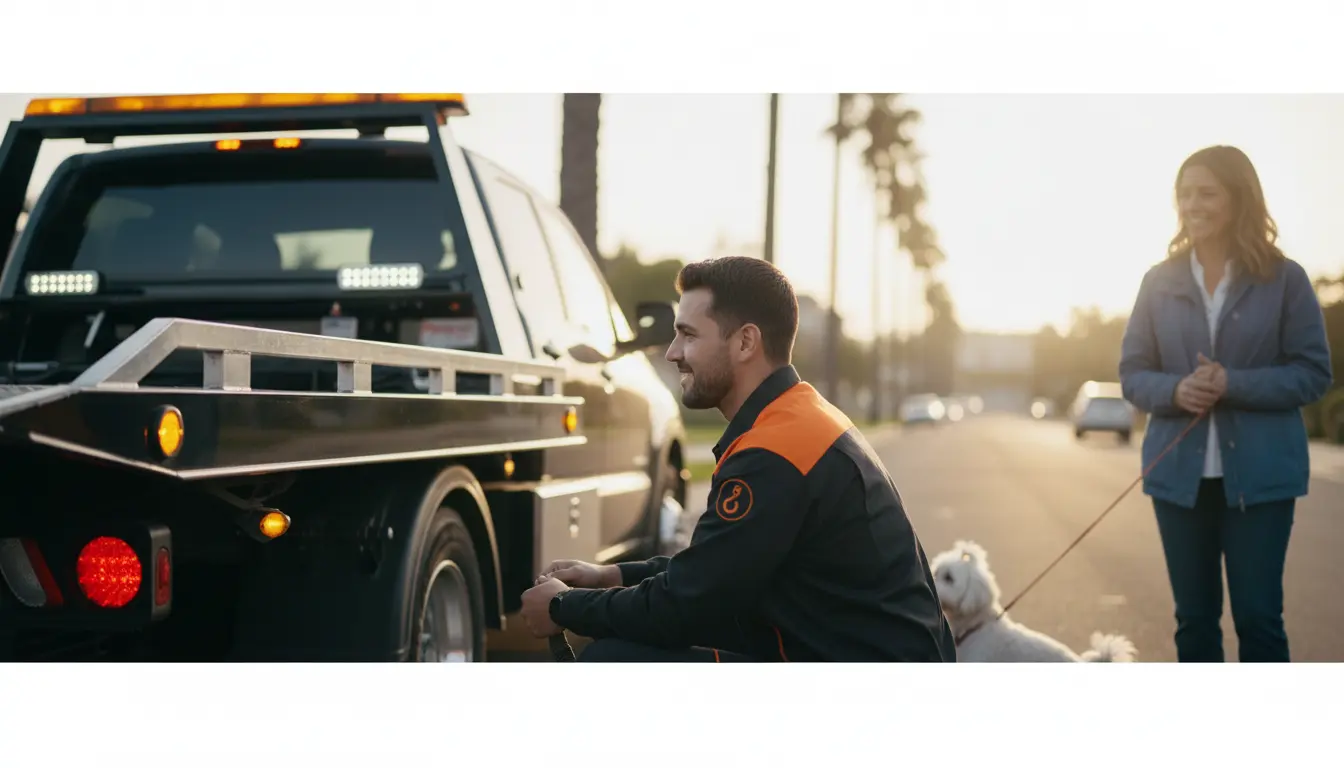
Being stranded on Interstate 4 in Orlando is a high-stress scenario, especially when navigating the city’s intense heat, heavy stop-and-go traffic, and sudden, severe weather. When your vehicle sputters to a halt, securing a technically sound logistical response is not just about convenience—it is about driver safety and preventing terminal damage to your vehicle’s drivetrain and chassis.
Selecting the correct recovery method—typically between flatbed transport and wheel-lift systems—is a critical decision. Flatbed tow trucks are essential for all-wheel-drive luxury vehicles or cars with sensitive drivetrain components, as they provide complete isolation from the pavement. For more information on our specialized capabilities, visit our Flatbed Towing page.
Technical Process of Recovery
Our technical workflow begins with an immediate assessment of your vehicle’s mechanical state and physical positioning. We determine the total gross vehicle weight rating (GVWR) and inspect the suspension architecture to ensure our rigging matches the chassis’s engineering requirements. By utilizing specialized wheel-lift systems with dollies or full flatbed elevation, we eliminate rolling resistance, protecting modern variable transmissions from the destructive frictional forces associated with traditional two-wheel towing.
In Orlando’s unique climate, where sudden downpours can push vehicles into soft, sandy embankments, our operators use advanced kinetic energy management principles. We calculate precise winching angles to execute heavy-duty recoveries without placing undue stress on the structural frame. You can learn more about these methods on our Quick Recovery Best Practices page.
| Feature/Metric | Professional Flatbed Logistics | Conventional Hook and Chain |
|---|---|---|
| Drivetrain Wear | Zero (Complete Isolation) | High Risk (Axle Rotation) |
| Securement Type | Four-Point Tire Strapping | Direct Frame Stress Tension |
| Ground Clearance | High (Optimized Loading Angle) | Low (Risk of Bumper Impact) |
Expert Insights on Emergency Hazards
[Image of internal combustion engine components]If your vehicle stalls in deep standing water during a storm, never attempt to restart the engine. Ignition in this state forces water into the combustion cylinders, causing catastrophic hydrostatic locking that can instantly ruin the engine block. In these cases, contact professional support immediately. Furthermore, avoid pulling onto narrow left-hand shoulders on highways; always aim for a wide right-hand emergency lane to maximize safety for both the driver and the recovery operator.
Frequently Asked Questions (FAQs)
Yes, but it must be transported with all four wheels isolated from the pavement. We achieve this using hydraulic flatbed decks or heavy-duty transport dollies to neutralize all drivetrain friction.
Activate your hazard lights immediately, keep your seatbelt fastened, and remain inside the vehicle. Exiting a vehicle on a high-speed interstate is extremely dangerous; wait for professional emergency dispatch to arrive.
Costs are based on the hookup fee, the distance traveled, the type of vehicle (e.g., motorcycle vs. passenger car), and the complexity of the recovery equipment required, such as winching or specialized tracking.
Yes, we operate in full compliance with Department of Transportation safety protocols, utilizing high-grade synthetic winching lines and tie-down assemblies with verified working load limit ratings.
Yes, we provide emergency towing and recovery services throughout the Orlando metro area, including Winter Park, Lake Buena Vista, Maitland, Altamonte Springs, Oviedo, and Winter Springs.
Conclusion
Choosing between flatbed and wheel-lift towing requires careful consideration of your vehicle’s mechanical health and environment. At G&D Towing, we are committed to technically sound, safe, and efficient recovery. If you are in need of assistance, visit our Contact Us page or explore our Blog for more safety resources. Don’t compromise on your safety—choose a provider that operates strictly in compliance with federal rigging regulations.