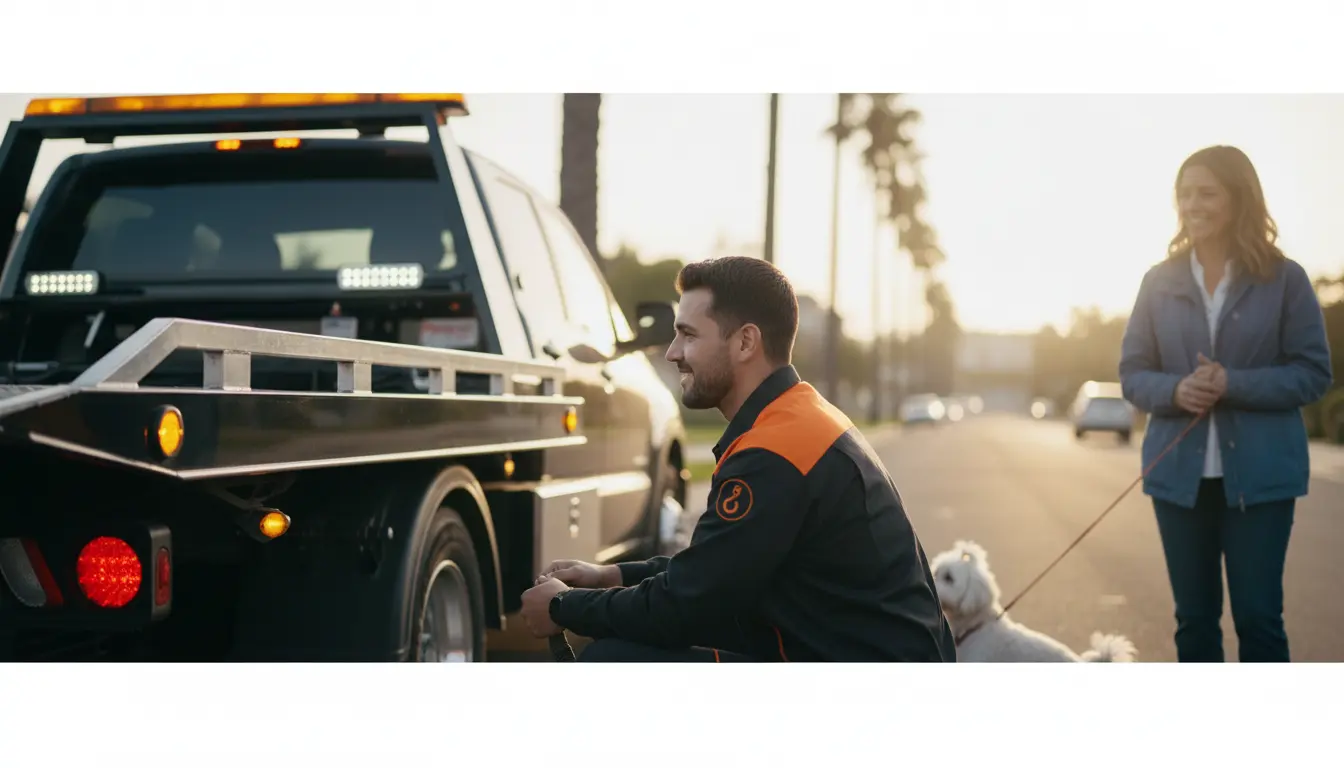
Emergency towing and scheduled towing are two distinct concepts in the vehicle recovery industry, often confused with one another due to their overlapping applications. Emergency towing refers to the immediate response and transportation of a vehicle that has suffered a critical failure, such as a breakdown or an accident, which necessitates prompt action to ensure the safety of the occupants and other road users. On the other hand, scheduled towing involves the pre-arranged transport of a vehicle from one location to another, often for maintenance, repair, or relocation purposes, without the urgency associated with emergency situations.
The distinction between these two services is crucial for Orlando drivers, as understanding their needs can significantly impact the choice of towing service and the overall cost. For instance, if a vehicle is involved in an accident on Interstate 4, emergency towing services must be dispatched immediately to ensure the safety of all parties involved and to prevent further accidents. In contrast, if a vehicle requires routine maintenance and needs to be transported to a repair shop, scheduled towing would be the more appropriate and cost-effective option. For immediate dispatch alignment and live support metrics across Central Florida, view our certified emergency services directory.
Orlando’s unique environment, characterized by severe weather conditions, dense traffic, and a high volume of tourist vehicles, exacerbates the need for reliable and efficient towing services. The city’s infrastructure, including the complex network of highways and roads, demands that towing services be equipped to handle a wide range of situations, from the retrieval of vehicles stranded in flooded areas to the delicate transport of luxury vehicles to and from repair facilities.
Technical Aspects of Emergency and Scheduled Towing
The technical process involved in both emergency and scheduled towing requires a deep understanding of vehicle mechanics, recovery techniques, and safety protocols. For emergency towing, the assessment of the vehicle’s condition and its surroundings is critical. This includes evaluating the vehicle’s gross vehicle weight rating, the terrain, and any potential hazards such as downed power lines or spilled hazardous materials. In contrast, scheduled towing may involve less urgency but still requires meticulous planning, including the selection of appropriate towing equipment and the securing of the vehicle to prevent damage during transport.
A key aspect of both emergency and scheduled towing is the use of specialized equipment designed to mitigate damage to the vehicle and ensure a safe transport process. Choosing the right towing service in Orlando is essential, as it directly impacts the efficiency, safety, and cost of the towing operation. Services that adhere to industry standards and that employ certified operators are better equipped to handle the complexities of towing in the Orlando area. If your asset requires a fully isolated transport deck configuration, explore our options via the flatbed towing page.
| Feature/Metric | Professional Flatbed Logistics | Conventional Hook and Chain |
|---|---|---|
| Drivetrain Wear | Zero (Complete Isolation) | High Risk (Axle Rotation) |
| Securement Type | Four-Point Tire Strapping | Direct Frame Stress Tension |
| Ground Clearance | High (Optimized Loading Angle) | Low (Risk of Bumper Impact) |
Data Comparison and Expert Insights
A comparison of professional flatbed logistics and conventional hook and chain towing methods reveals significant differences in terms of drivetrain wear, securement type, and ground clearance. Professional flatbed logistics offer zero drivetrain wear, four-point tire strapping, and high ground clearance, minimizing the risk of damage to the vehicle during transport. In contrast, conventional hook and chain methods pose a high risk of drivetrain wear, utilize direct frame stress tension, and offer low ground clearance, making them less suitable for vehicles that require careful handling.
Experts in the field emphasize the importance of proper vehicle recovery techniques, especially in scenarios involving all-wheel-drive vehicles, which require complete drivetrain decoupling before transport to prevent transmission damage. Moreover, the unique challenges presented by Orlando’s environment, such as sudden severe thunderstorms and intense afternoon traffic, necessitate the application of advanced kinetic energy management principles and precise winching angles to ensure safe and efficient recovery operations. For precise guidelines on managing high-stress highway incidents, explore our quick recovery best practices guide.
Pricing and Safety Considerations
The pricing of towing services in Orlando can vary significantly depending on factors such as the type of vehicle, the distance to be towed, and the complexity of the recovery operation. Standard hookup fees for local passenger vehicles can range from $75 to $110, with additional per-mile transport rates applied. Specialized services, such as motorcycle transport, are billed under separate flat-rate menus. The final cost is also influenced by technical factors including the required winching distance and the need for specialized tracking equipment. To find affordable towing setups and baseline response costs across Central Florida, view our affordable towing options page.
Safety is a paramount consideration in the towing industry, with operators required to adhere to strict safety protocols and structural rigging regulations. This includes the use of high-grade synthetic winching lines and tie-down assemblies with verified working load limit ratings. Continuous training and certification of operators are essential to ensure that they are equipped to handle the unique challenges of towing in the Orlando area, including the management of traffic incidents and the protection of stranded motorists on active highways. To read about our organizational background and team standards, read through our About Us page.
Frequently Asked Questions (FAQs)
Yes. All-wheel-drive vehicles must be transported with all four wheels completely isolated from the pavement to prevent heat buildup within the drivetrain. We achieve this by utilizing advanced hydraulic flatbed decks or by placing the non-rolling wheels into heavy-duty transport dollies, entirely neutralizing the risk of gear friction.
If your vehicle stalls in a live lane of traffic, you must immediately activate your hazard markers, remain secured inside the cabin with your seatbelt fastened, and contact emergency dispatch. Attempting to exit the vehicle on a high-speed highway is highly dangerous due to unpredictable driver behavior and restricted visibility.
We utilize specialized flatbed trucks equipped with extended loading ramps or automated air-ride suspension systems that lower the loading angle to less than ten degrees. This expanded approach completely eliminates the risk of ground contact, ensuring that front splitters and low-hanging carbon fiber body panels clear the deck safely.
Emergency dispatches during severe weather involve complex rigging adjustments, specialized kinetic tracking equipment, and elevated transit risk environments. These operational complexities require minor adjustments to compensate for the technical difficulty of the extraction.
You can quickly input your location or asset parameters and connect directly with an active on-duty coordinator by visiting our dedicated emergency contact page.
Final Thoughts
In conclusion, understanding the distinction between emergency towing and scheduled towing is crucial for Orlando drivers. The choice between these services can significantly impact safety, efficiency, and cost. By selecting a towing service that is equipped to handle the unique challenges of the Orlando environment, adheres to industry standards, and employs certified operators, vehicle owners can ensure that their towing needs are met safely and efficiently. For more technical insights and deep-dives into Central Florida transit management, check out our comprehensive roadside technical blog.
Remember, the safety of you and your vehicle is paramount. Always prioritize professional towing services that can provide the expertise and equipment necessary to handle any situation. Whether you are dealing with an emergency or scheduling a tow for maintenance, choosing the right service can make all the difference in ensuring a safe and successful transport operation. To explore our main hub capabilities and full service radius across Downtown Orlando, Winter Park, and Lake Buena Vista, visit the roadside assistance and towing page.