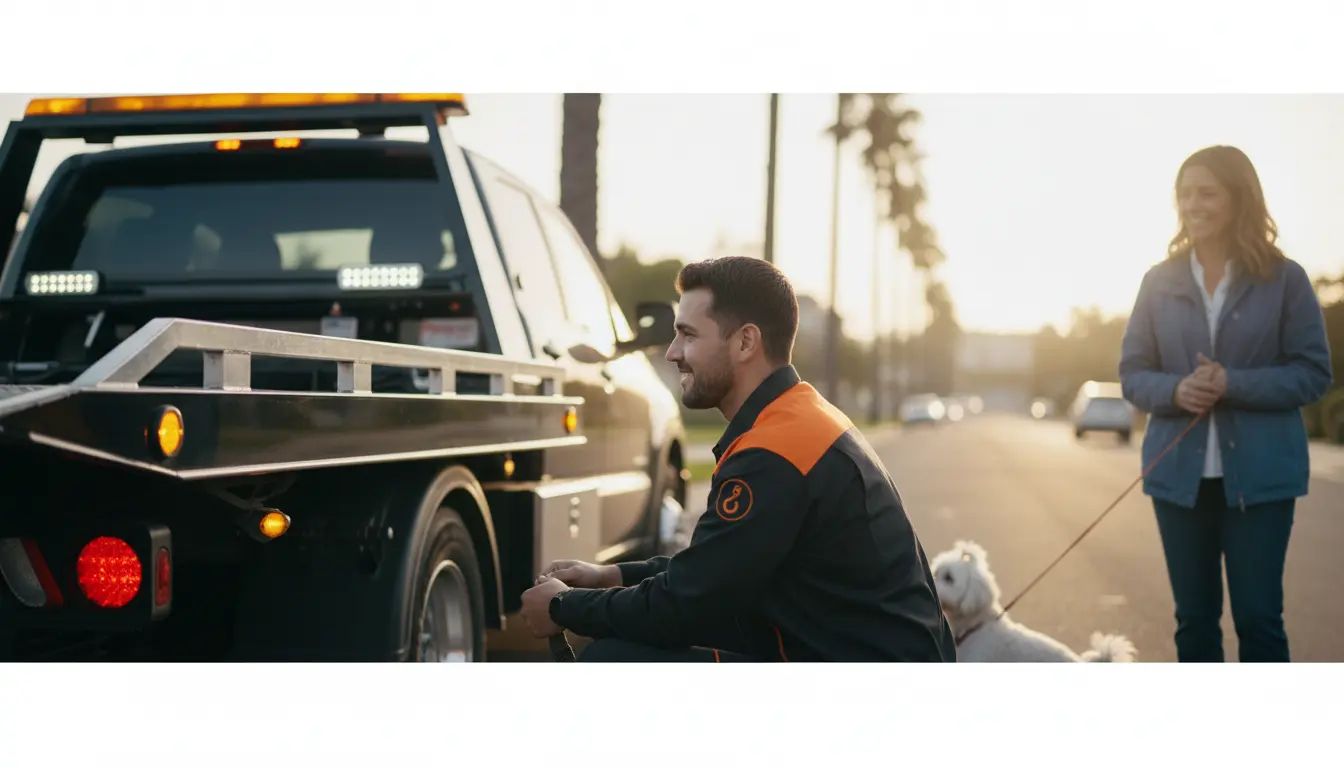
Managing sudden battery failure along Central Florida’s high-speed arteries requires immediate access to validated roadside protocols. When an internal combustion engine fails to crank amidst extreme humidity and gridlock, motorists often attempt unverified jump-starts that can surge sensitive electronic control units. Securing a certified professional roadside assistance team eliminates these hazardous electrical risks and guarantees a safe power restoration sequence.
Modern vehicular electronic architectures are highly susceptible to voltage spikes, making the jump-start sequence a delicate operation. If your vehicle remains unresponsive despite multiple attempts, or if your dashboard flashes multiple warning lights, you must stop immediately. Relying on an expert provider of certified battery jump-start and diagnostic services prevents catastrophic short-circuit damage to your vehicle’s expensive onboard computer systems.
At G&D Towing, we prioritize clean, technically sound power restoration protocols that strictly follow factory-recommended jump-start sequences. From validating the electrical load compatibility between vehicle systems to deploying high-capacity portable jump-starters that neutralize the need for dangerous cable interaction, our certified operators deliver secure roadside care. Maintaining these high standards protects your vehicle’s sensitive electrical grid and ensures total transit control across every emergency dispatch.
Technical Jump-Start Mechanics & System Protection
The fundamental technical challenge of jump-starting lies in creating a stable electrical bridge between two disparate power sources without inducing a circuit overload. Our operators first perform a visual inspection of the dead battery to rule out leaking electrolyte fluids or physical casing ruptures, which would make any restart attempt an explosion hazard. By utilizing industry-standard surge-protected jumper rigs, we maintain a constant voltage threshold that safeguards delicate sensor modules.
Once the circuit is established, we monitor the amperage draw to confirm if the alternator is engaging properly or if the battery has reached a point of permanent sulfation. If the vehicle fails to maintain ignition, we transition to flatbed recovery to prevent stranded assets from blocking active traffic lanes. To evaluate our complete operational list of mechanical and electrical transport formats, motorists can view our layout of specialized towing and recovery services.
| Jump-Start Metric | Professional Fleet Standards | Uncertified Manual Methods |
|---|---|---|
| Voltage Stability | Surge-Protected Bridging Rigs | Raw Kinetic Cable Transfer (High Spike Risk) |
| Battery Inspection | Thermal & Acid Leakage Audit | Direct Connection (Explosion Potential) |
| System Diagnostics | Alternator & Load Test Verification | Guesswork Restarting (ECU Damage Risk) |
Expert Insights on Electrical Hazards & Safety
A frequent error made by motorists experiencing electrical failure is repeatedly turning the ignition key while the battery level is critically low. This action forces the starter motor to pull massive amperage, which heats up the solenoid contacts until they weld shut, creating a localized fire hazard within the engine bay. If the engine does not turn over after one or two attempts, stop immediately and contact professional support.
Furthermore, never attempt to jump-start a battery that appears physically swollen or cracked, as the risk of acid spray is severe. Proper safety management requires wearing appropriate eye protection and maintaining clean terminal connection points to avoid sparking. Motorists looking to analyze more preventative battery care frameworks can follow our updates through our comprehensive regional roadside assistance blog.
Safety Protocols & Department of Transportation Compliance
G&D Towing executes every battery restart and vehicle extraction sequence in strict accordance with federal Department of Transportation safety protocols. We utilize high-performance, weather-resistant equipment that preserves the integrity of your vehicle’s electronic infrastructure while maintaining active traffic management loops to safeguard public right-of-ways. Operational safety remains our absolute priority, requiring full compliance with on-scene illumination rules during all emergency dispatches.
Frequently Asked Questions (FAQs)
Yes, if the voltage surge from the donor battery exceeds the sensitivity threshold of your vehicle’s Electronic Control Units (ECUs), it can short-circuit the sensitive microprocessors, leading to extensive electrical repairs that may not be covered under standard warranty policies.
Sulfation is indicated by a battery that takes an excessively long time to accept a charge, shows a voltage reading significantly below 12.6V even after driving, or fails to hold a charge overnight, indicating that the lead plates are covered in insulating crystal layers.
Connecting to a remote engine bolt creates a safer ground path and reduces the likelihood of generating sparks directly at the battery, which could potentially ignite the hydrogen gas frequently vented by lead-acid batteries during charge sequences.
The alternator acts as the primary power generator once the engine is running, supplying electricity to all onboard systems and simultaneously recharging the battery. If the alternator fails, the vehicle relies entirely on battery power until the system shuts down, which can happen in minutes.
Yes, if floodwater reaches the battery terminals or the primary wiring harnesses, it creates a path of low resistance that bypasses the ignition switch, potentially damaging the entire fuse block and causing parasitic current leaks that drain the remaining charge instantly.
Final Thoughts
In conclusion, keeping your vehicle mobile through Florida’s unpredictable electrical strain relies on identifying battery failure early and choosing certified jump-start support over risky manual techniques. Relying on an experienced, code-compliant fleet specialist guarantees that your vehicle’s electronic systems remain secure under rigorous federal safety standards. Motorists can build communication channels directly through our official emergency dispatch team to launch a secure and tactical response.