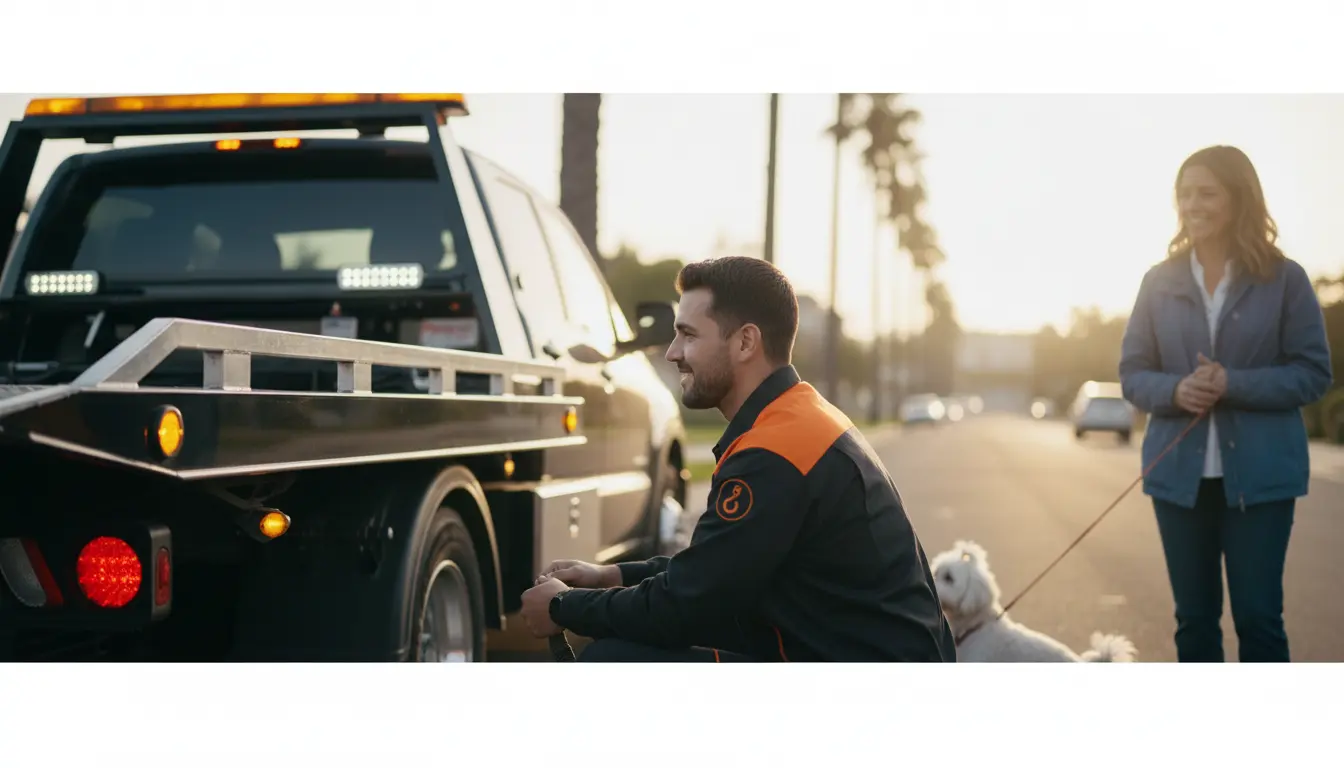
Navigating vehicular immobilization along Orlando’s high-speed arteries requires immediate, safety-first logistical protocols. When a breakdown occurs amidst aggressive tourist gridlock and extreme humidity, motorists often make errors that escalate minor mechanical failures into terminal structural damage. Securing a professional, certified automotive recovery team is essential to neutralize traffic hazards and prevent further asset degradation.
Central Florida’s unique combination of high-density transit and rapid atmospheric changes accelerates component failure, frequently trapping drivers in high-risk zones. Whether you are dealing with a simple battery drain or complex drivetrain seizure, our comprehensive roadside assistance and recovery services deploy high-performance mobile units to clear lanes efficiently and protect your vehicle’s mechanical integrity.
At G&D Towing, we optimize our dispatch sequences by integrating real-time traffic flow data, ensuring our operators reach your location via the most efficient vectors. By utilizing advanced rigging techniques and non-marring securement, we ensure your vehicle remains untouched by transit-induced stress. Maintaining these high standards protects your investment and streamlines every emergency dispatch across the Orlando metropolitan region.
Safety Protocols & Precision Extraction Mechanics
Our logistical workflow initiates with an assessment of the vehicle’s physical positioning relative to active traffic lanes. When immobilized on a narrow shoulder, operators implement high-visibility perimeter zoning to safeguard the scene. For vehicles suffering from transmission seizure or braking failure, we utilize specialized wheel-dolly attachments or full-deck flatbed elevation to neutralize all rolling resistance, preventing further internal component wear.
When stalled in low-lying zones prone to flooding, we calculate exact winching angles to shift the vehicle without introducing torsion to the unibody. By utilizing high-capacity synthetic winching lines, we execute heavy-duty recovery maneuvers that preserve the structural frame’s integrity. To inspect our complete suite of technical transport and extraction formats, motorists can browse our layout of certified emergency towing services.
| Recovery Parameter | Engineered Flatbed Logistics | Conventional Hook and Chain |
|---|---|---|
| Drivetrain Wear | Zero (Complete Isolation) | High Risk (Axle Rotation) |
| Securement Type | Four-Point Tire Strapping | Direct Frame Stress Tension |
| Ground Clearance | High (Optimized Loading Angle) | Low (Risk of Bumper Impact) |
Expert Insights on Hydrostatic Hazards & Site Safety
When a vehicle stalls in standing water, the operator must strictly avoid attempting to restart the engine. Attempting ignition while the intake resides below the water line pulls liquid into the combustion chambers, causing catastrophic hydrostatic locking that instantly ruins the entire engine block. Professional recovery remains the only safe avenue for reclaiming an immobilized vehicle in these extreme conditions.
A frequent error made by motorists facing highway stalls is drifting into narrow left-hand shoulder zones. This placement minimizes your defensive working room and places the recovery fleet in the direct line of high-velocity traffic. Motorists looking to analyze broader preventative care guidelines and structural roadside safety tips can follow our technical updates via our updated roadside technical blog.
Safety Protocols & Department of Transportation Compliance
G&D Towing executes every post-breakdown extraction and vehicle relocation in strict accordance with federal Department of Transportation safety protocols. We utilize high-performance, weather-resistant equipment that preserves the integrity of your vehicle’s frame while maintaining active traffic management loops to safeguard public right-of-ways. Operational safety remains our absolute priority, requiring full compliance with on-scene illumination rules during all emergency recovery dispatches.
Frequently Asked Questions (FAQs)
Flatbed transport eliminates all road-to-wheel contact, which is vital if the failure compromised the vehicle’s suspension or steering components. Forcing a vehicle to roll on damaged parts can lead to catastrophic chassis distortion and loss of directional control.
Operators use precise winching vectors and snatch blocks to redirect the load, ensuring the winching force is applied evenly across factory-approved frame points rather than fragile body panels, preventing unnecessary frame deformation.
Hydrostatic locking happens when water enters the combustion chamber. Since water cannot be compressed like air, the piston meets a solid fluid barrier, causing connecting rods to bend or shatter instantly, which permanently ruins the engine core.
Synthetic harnesses wrap over the tire rubber to secure the vehicle via its unsprung mass, completely avoiding contact with metal frame components. This prevents the chipping and frame stress associated with heavy chain-based rigging, which is critical for preserving frame geometry.
High-visibility perimeter zones protect recovery operators and the motoring public from secondary highway collisions, especially during low-visibility scenarios like evening rainstorms or dense fog on major interstates.
Final Thoughts
In conclusion, keeping your vehicle mobile through Florida’s extreme weather relies on identifying mechanical failure early and choosing certified emergency recovery support over risky manual techniques. Relying on an experienced, code-compliant fleet specialist guarantees that your vehicle’s integrity remains secure under rigorous federal safety standards. Motorists can build communication channels directly through our official emergency dispatch team to launch a secure and tactical response.